So I’ve just come back from an intense 2-day workshop attempting to bring together all of the Emergency Food Security and Vulnerable Livelihoods (EFSVL) staff, along with key staff from the long-term Country Programme in the Philippines, to plan our strategies for the next few months, and try to integrate our emergency response work with longer term sustainable livelihoods frameworks.
Sounds fascinating? It really was.
Here are some of the really interesting challenges and issues we are facing in the long-term recovery process for some key livelihoods sectors in the Philippines. As I started writing this it got longer and longer, so I’ve split it into two separate posts about Fisheries and Coconuts – two sectors that were heavily affected by the typhoon, and face massive challenges in rehabilitation and recovery….
Fisheries
How do you support a fisherman to rebuild his livelihood, and at the same time encourage him not to fish?
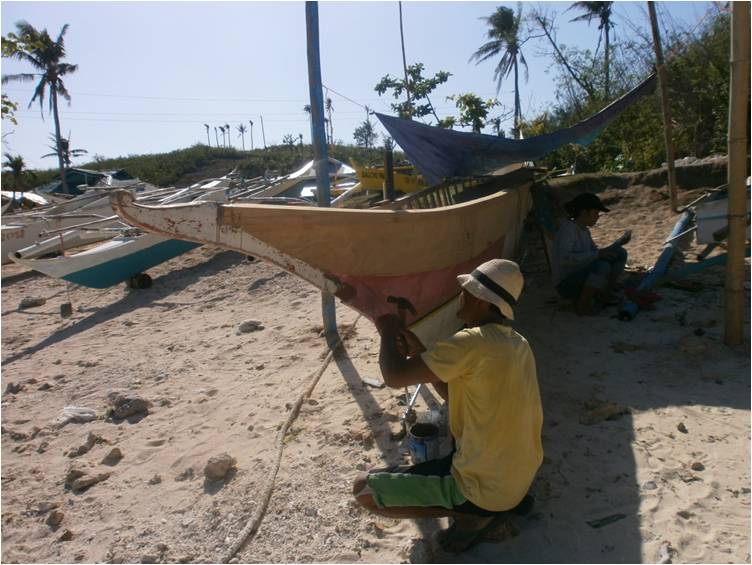
Over 30,000 fishing boats were damaged or destroyed by typhoon Yolanda, but even before the typhoon some areas were being heavily over-fished, and it wasn’t just boats that were destroyed. The storm caused massive damage to marine eco-systems, corals, mangroves and other fish and aquaculture breeding grounds which will need time to recover.
And it turns out, fish need corals and mangroves in order to hang out, meet other like-minded fish, and have lots and lots of baby fish….



 Had we but world enough and time...